
Employers frustrated by the recent demands of talent may assume that economic headwinds will see the power pendulum swing back in their favor.
People’s relationship with work was changing long before worldwide upheaval and digital disruption sparked rapid shifts, but the widespread growth of AI’s influence floored the accelerator.
Over the last few years, economic and market changes have led to a new work paradigm. Employees demand greater flexibility, more autonomy and more opportunity to work from home. After initial waves of furloughs and layoffs, many employers were left grappling with the challenge of securing talent whose priorities and motivations had changed profoundly during this mass recalibration of work-life expectations.
As organizations strive to navigate the employment landscape with the agility needed to thrive, we look at where change has had the greatest impact — and where employers go from here in the ongoing battle for talent. Employers frustrated by the recent demands of talent may assume that economic headwinds will see the power pendulum swing back in their favor. This assumption ignores the new realities of work.
Strategies to address the changing employer-employee relationship
We spoke to some of our own thinkers on change management about the fluctuating relationship between employers and employees. Here, we share our insights on those new realities and what employers can and should be doing to win talent in this new work paradigm.
1. Rethinking our relationship with work
When work is your priority, it's hard not to measure your sense of personal value against it. But when people were suddenly offered the opportunity to separate their self-worth from their job, they were given a gift: a moment of great personal exploration. Cielo's Executive Vice President — Revenue Strategy, Sally Hunter, agrees: "It's not only work that's changed, humans are fundamentally changed."
Psychologist Anthony Klotz (who coined the term "the great resignation") says worldwide events, like the pandemic, make people step back and rethink their lives. Not only does feeling removed from work allow them to try other things, but confronting the prospect of death and illness causes human beings to ask existential questions about what really makes them happy or gives them meaning and purpose.
Worldwide there were 114 million fewer people employed in 2020 than in 2019.
With that change of perspective came an exodus of workers. As people no longer saw themselves defined by their work, they reconsidered their personal choices. The result? Worldwide there were 114 million fewer people employed in 2020 than in 2019.
Beyond a wave of early retirements, the impacts of the last several years changed people's perspective on how important work actually is. Not only have many people realized they can work remotely, commute less and choose their own hours, but we've seen many streamline their lives to where they no longer need the same level of disposable income as before. For example, since March 2020 in the U.S. 20% of workers have changed careers, with over half of them happy to take a pay cut.
CieloIt’s not only work that’s changed, humans are fundamentally changed.
20% of workers have changed careers, with over half of them happy to take a pay cut.
2. Changing priorities
The rules of engagement used to be pretty simple: businesses set the terms of employment for grateful employees who weren't too demanding. While the power may currently sit with employees, a slowing economy and the specter of recession would ordinarily see the power move back in employers' favor.
Despite the prospect of a tightening labor market, the previously accepted rules of the pendulum's swing no longer apply. Employers used to leveraging compensation to negotiate with staff will find that it carries less currency in this changed world.
Hunter explains: "Employee responses no longer correlate as positively to methods previously used to motivate them. And employees are not as loyal or 'sticky' as they used to be. Employers' traditional leverage points have been weakened and it's time to reimagine engagement."
Greg Summers, Cielo’s former Chief Customer Officer, says: "In people's quest to make their jobs fit into their lives, they no longer feel obligated to be in an office five days a week. People are also less willing to give discretionary effort than they were years ago."
Becky Chung, Cielo’s former Vice President — Talent Development, says: "We're at a pivotal point. People are being selective about the opportunities they're going to take. It used to be that dollars drove decisions, but people have shifted their focus onto nontraditional benefits like flexibility and remote working."
Workers now value flexibility as much as they value a 5% pay raise, with working parents seeking greater flexibility because it affords them more time to manage childcare and other responsibilities.
As such, employees are now more vocal about their workplace expectations — but those expectations differ depending where they are on their career journey.
CieloPeople have shifted their focus onto nontraditional benefits like flexibility and remote working.
3. Mind the generation gap
Older and younger generations have always viewed work from very different perspectives, but we’re now seeing a major change in attitude and expectations at both ends of the spectrum. Not only have early retirements risen among those in the latter stages of their careers, but we're also finding more mid-career professionals ditching the 9-to-5 corporate life to pursue lifestyle careers or follow their passions.
The more interesting change comes at the younger end of the talent market. Hard on the heels of a global pandemic, and with increasing economic uncertainty, Generation Zs feel that they don't have the same job opportunities and financial security as their parents.
Hunter says: "Candidates fresh out of university or college are coming into the workforce after a challenging few years, looking for security and displaying clear expectations around benefits, compensation and flexibility. They're looking for long-term careers, for a sense of security you wouldn't necessarily expect from that generation. Previously, I wouldn't have said that an 18-year-old would go for a six-year commitment, but it's changed. They're aware that they need to insulate themselves from what can happen; they're trying to protect themselves from the economic challenges out there."
Across the board, though, we believe that meaningful engagement is key to retaining staff. Research shows that workers are more likely to stay with employers who foster culture, employee value, and the ability for employees to have their voices heard.

4. Recommit to your identity as an employer of choice
Market volatility and economic shifts have created an unpredictable talent landscape where recruitment strategies must constantly evolve. Organizations now face rapidly changing candidate expectations and evolving work models. So, what can employers do?
Rather than try to pre-empt or react to every emerging situation, we advocate staying true to the first principles of talent acquisition and retention: a deep commitment to creating a desirable employer brand and a focus on honing their employee value proposition.
Ultimately, being the business that people want to work for is the best insurance against the unpredictable swing of the power pendulum. And the most effective way of truly harnessing the power of change.
Despite their differences, employees still share some common ground with employers. We see alignment around the concept of purpose — something that employees want to see reflected in their employer. Both parties want success, and the rewards of that success. People want career advancement and to be proud of where they work: motivations that employers also share.
About the authors
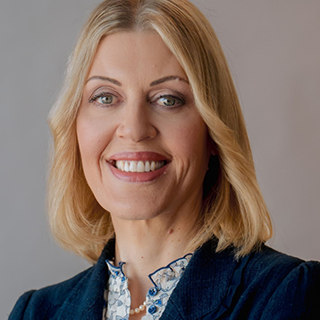
Executive Vice President – Revenue Strategy, Cielo
LinkedIn connect


